New Delhi: Progress made in strengthening national launch and space infrastructure during 2025:
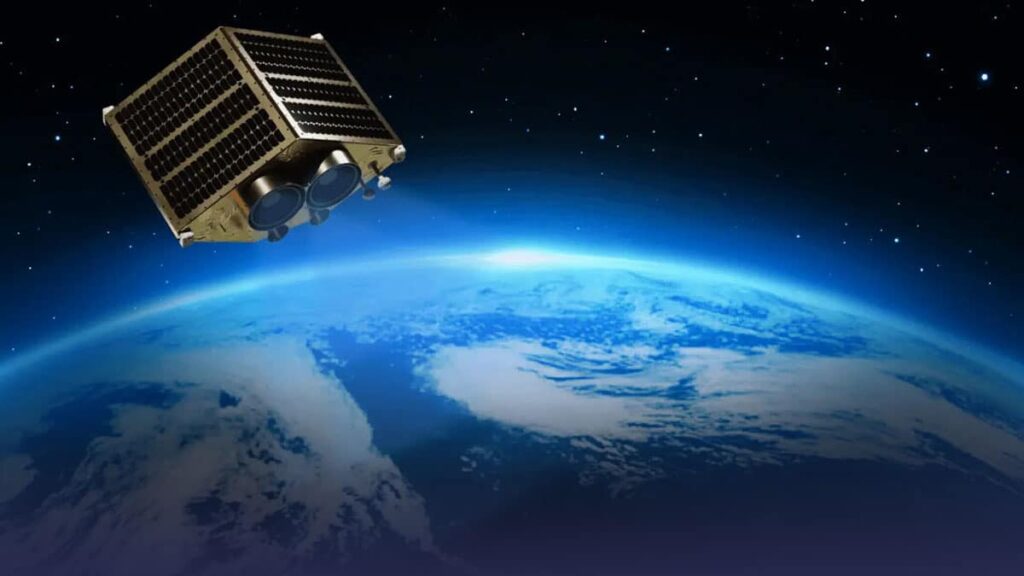
- The SPADEX mission successfully demonstrated autonomous docking and undocking, along with power transfer between satellites—a major step towards in-orbit servicing capabilities and docking operations on space stations. This was further complemented by the successful circumnavigation of the SPADEX satellites. This achievement made India the fourth nation to demonstrate docking in space.
- The PSLV Orbital Experimental Module (POEM-04), which was also part of the PSLV-C60 / SPADEX mission, flew with multiple payloads from ISRO, space startups & academia, fostering innovation through in-orbit experimentation. The POEM-4 completed more than 1000 orbits and was a highly successful POEM mission. The mission also demonstrated a robotic arm in-orbit and the germination of seeds in microgravity.
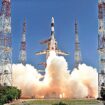
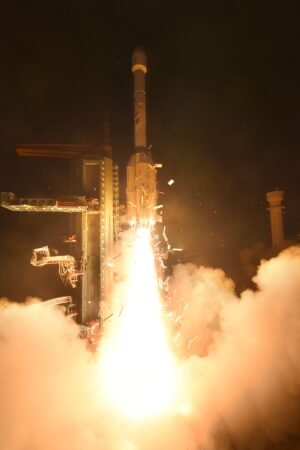
- The GSLV-F15/NVS-02 mission in January 2025 was the 100th mission to lift-off from Sriharikota.The launch vehicle performed excellently by precisely injecting the satellite to its intended orbit.
- The GSLV-F16/NISAR mission scored yet another first by becoming the first joint ISRO-NASA mission. It is significant that the one of the most expensive payloads in the earth observation segment with 12m unfurlable antenna from NASA was integrated on an Indian satellite bus and launched on an Indian launch vehicle. NISAR, the first dual frequency SAR satellite, along with NASA’s L-band SAR payload & ISRO’s S-band SAR payload is now fully operational.
- The LVM3-M5 / CMS-03 mission is another unique mission where ISRO achieved the milestone of the heaviest GTO satellite from the Indian soil.
- The LVM3-M6 / BlueBird Block-2 set the record of the launch of heaviest ever satellite from Indian soil. This mission also validated the electro-mechanical actuation for the S200 motor along with composite thrust frame for C25 stage and other modifications to improve the payload performance by 176 kg. We can confidently say that the S200 EMA is globally the most powerful space qualified electric actuation system compared to the other launchers that use EMA for solid motors.
- The Department obtained financial approval from the Government for the establishment of the Third Launch Pad at Sriharikota as part of the essential launch infrastructure required for Next Generation Launch Vehicles. A dedicated launch site is being established for the Small Satellite Launch Vehicle (SSLV) at Kulasekarapattinam, Tamil Nadu for which the construction activities for the launch pad facilities and integration building have commenced.
A 10t vertical mixer for solid propellant production was commissioned at Sriharikota, Andhra Pradesh along with the second process line at the Ammonium Perchlorate Plant, Alwaye, Kerala to enhance the solid motor production capacity. A Cryogenic Turbopump Test facility has also been commissioned to enhance the throughput for the testing & acceptance of cryogenic engine subsystems. Integrated Titanium alloy Tank Production.