close

DRDO

Defence Industry & TechnologyDRDO

DRDO Showcases Advanced Semiconductor Technologies at ESTIC 2026

DRDO semiconductor technologies

Defence Research and Development Organisation (DRDO) participated in the Emerging Science, Technology and Innovation Conclave (ESTIC) 2026 held at Bharat Mandapam, New Delhi from October 27 to 29, 2026. The conclave with the theme ‘Creative Minds, Catalysing Science, Empowering Society’, was inaugurated by Prime Minister Shri Narendra Modi and was jointly organised by 12 ministries/departments under the guidance of the Principal Scientific Adviser to the Government of India. The event showcased cutting-edge research, deep-tech breakthroughs, and thought provoking discussions with Nobel Laureates, global experts, policymakers, and emerging leaders – igniting a new era of scientific leadership.

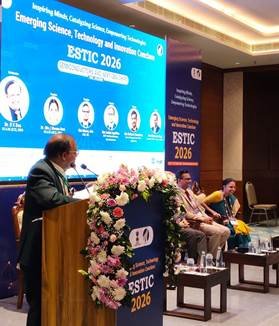
DRDO, as one of the key organisers, led the thematic session on ‘Semiconductors & Next-Generation Chips’. Chaired by Distinguished Scientist and Director General, Electronics and Communication Systems (ECS) Dr BK Das, the session brought together eminent leaders from the industry, academia, indigenous chip-development ecosystem and defence electronics.

A panel discussion, moderated by Dr BK Das, was also organised as part of the session, with Distinguished Scientist and Director General (Micro Electronic Devices, Computational Systems & Cyber Systems) Dr Sheena Rani among the panellists. The discussions explored emerging developments in semiconductor technologies, purpose-built Artificial Intelligence (AI) System-on-Chips (SoCs), intelligence at the silicon edge and the evolving microprocessor landscape. The session also highlighted DRDO’s evolving role in enabling industries and start-ups to develop game-changing solutions, accelerate next-generation chip design and strengthen indigenous core technologies.

The DRDO Outreach Stall at ESTIC 2026 showcased key initiatives, achievements, research programmes and contributions of the Ministry of Defence towards science, technology and innovation. It featured a diverse range of indigenous technologies developed by DRDO laboratories, including advanced communication systems, quantum technology prototypes, extreme-cold-weather clothing, PRABALA female full-body protector, passive and powered exoskeletons, portable hybrid energy management systems, high-power pulse laser diodes and scramjet engine technology.

DRDO also participated in the Thematic and Departmental Exhibitions at the conclave. At the thematic exhibition on ‘Semiconductors and Next-Generation Chips’, DRDO showcased its achievements in two critical semiconductor technology domains: Monolithic Microwave Integrated Circuits (MMICs) and Infrared Focal Plane Arrays (IRFPAs), developed by the Solid State Physics Laboratory (SSPL), Delhi.

Gallium Arsenide (GaAs) and Gallium Nitride (GaN)-based MMICs, along with Multi-Chip Modules (MCMs), displayed at the exhibition have been employed in several strategic missions. These technologies serve as essential building blocks for advanced radar systems and Electronic Warfare (EW) applications. The IRFPAs, on the other hand, serve as the sensing elements or ‘eyes’ of tactical missiles, enabling target detection and tracking during the terminal phase through Imaging Infrared (IIR) seekers. The exhibits covered a broad range of infrared technologies, including Short-Wave Infrared (SWIR), Mid-Wave Infrared (MWIR) and Long-Wave Infrared (LWIR), demonstrating DRDO’s extensive indigenous capabilities in advanced semiconductor technologies.

Other notable DRDO exhibits included scramjet engine technology and neuromorphic accelerators, highlighting breakthroughs in complex and emerging technological domains. The exhibition also featured advanced communication systems, Quantum Random Number Generators (QRNGs), protective equipment, exoskeletons, portable hybrid energy management systems, Photonic Integrated Circuits (PICs) and laser proximity sensors.

Semiconductor technology is a critical enabler of national sovereignty, economic strength and digital security. It plays a pivotal role in advancing the vision of Viksit Bharat by 2047 and Aatmanirbhar Bharat by strengthening indigenous technological capabilities. From communication devices and advanced sensing systems to sophisticated defence platforms, semiconductor chips determine the performance, efficiency and reliability of modern technologies. Beyond chip manufacturing, technological self-reliance requires comprehensive capabilities in chip design, fabrication, testing, industrial-scale production and resilient supply chains.

India aspires to emerge as a globally competitive, dependable and technologically self-reliant semiconductor powerhouse by 2047, with leadership in selected next-generation chip technologies. This vision encompasses the development of a vibrant and sustainable semiconductor ecosystem, generation of high-value employment opportunities and delivery of inclusive societal benefits.

Over the years, India’s strategic defence laboratories and specialised semiconductor foundries, including SSPL, Gallium Arsenide Enabling Technology Centre (GAETEC), Semiconductor Technology and Applied Research Centre (STARC) and Semiconductor Laboratory (SCL), have developed specialised competencies in Gallium Arsenide (GaAs), Gallium Nitride (GaN), Micro-Electro-Mechanical Systems (MEMS) and mature silicon process technologies.

read more
DRDO

DRDO to Lead Semiconductor Session at ESTIC-2026

DRDO semiconductor session ESTIC-2026

New Delhi: Defence Research & Development Organisation (DRDO) will spearhead a thematic session on ‘Semiconductors and Next-Gen Chips’ during Emerging Science, Technology & Innovation Conclave (ESTIC-2026) scheduled to be held at Bharat Mandapam, New Delhi from October 27 to 29, 2026. The conclave is being jointly organised by 12 ministries/departments under the guidance of the Principal Scientific Adviser to the Government of India. It is a significant national initiative aimed at advancing the vision of Viksit Bharat @ 2047 and strengthening Aatmanirbharta through science, technology and innovation.

The DRDO session will bring together eminent leaders from the industry, academia, indigenous chip-development ecosystem and defence electronics. It will feature a keynote address by VP & MD, Micron India followed by talks by CEO, Bharat Semi, CEO, Netrasemi and Director, IIT Madras. The talks will explore key developments in semiconductor technologies, purpose-built AI system-on-chips, intelligence at the silicon edge and the evolving microprocessor landscape.

The speakers with diverse expertise will enable a substantive dialogue on semiconductor fabrication, chip design, AI computing, indigenous semiconductor platforms, research and development, and strategic and defence applications. The session is expected to foster stronger collaboration among industry, academia and strategic stakeholders, identify emerging technological opportunities and contribute to the development of a robust domestic semiconductor ecosystem, with emphasis on indigenous capabilities for critical and next-generation applications.

The Outreach Stall at ESTIC 2026 will provide a platform to showcase the Ministry’s key initiatives, achievements, research programmes, and contributions to science, technology, and innovation. The stall will feature a diverse range of indigenous technologies developed by DRDO laboratories, including advanced communication systems, quantum technology prototypes, extreme-cold-weather clothing, the PRABALA female full-body protector, passive and powered exoskeletons, portable hybrid energy management systems, high-power pulse laser diodes, and scramjet engine technology.

The exhibits will highlight ongoing efforts to strengthen indigenous R&D, promote technology development and self-reliance, and address critical requirements in defence and other strategic sectors. The stall will also foster collaboration among academia, industry, start-ups, and research institutions while enhancing public awareness of the Ministry’s role in advancing India’s scientific and technological capabilities.

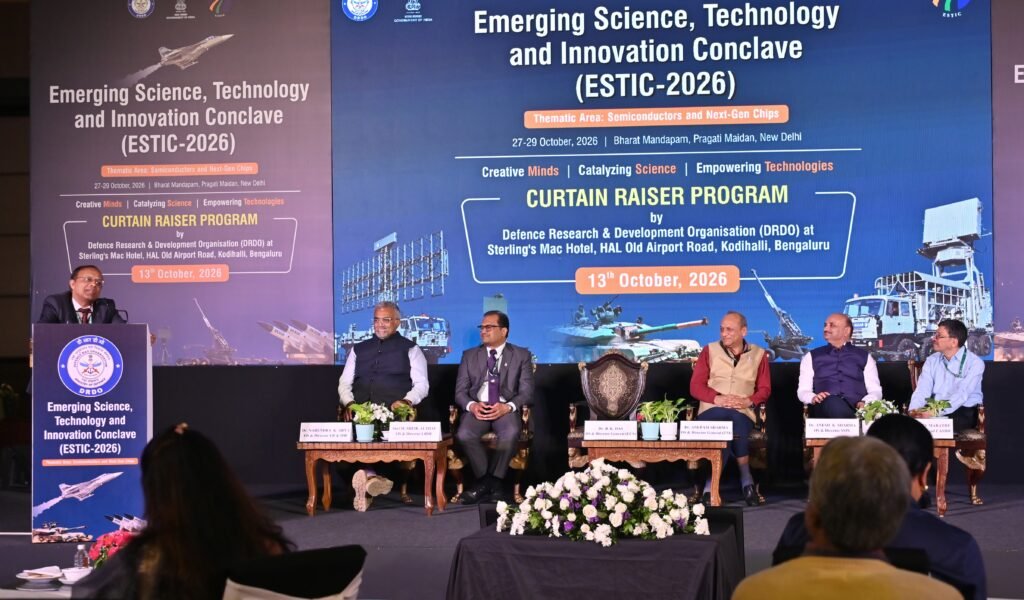
Presiding over the curtain-raiser event organised by DRDO in Bengaluru, Karnataka on October 13, 2026, Distinguished Scientist and Director General (Electronics and Communication Systems) Dr BK Das underscored the importance of semiconductors and next-gen chips for economic competitiveness, digital sovereignty and national security. He stressed that building an end-to-end, resilient microelectronics ecosystem is essential to powering telecommunications, automotive systems, industrial automation, AI hardware and strategic defence platforms as India advances towards Viksit Bharat.

Dr Das added that strengthening domestic capabilities is critical to protecting the national economy from global supply-chain disruptions, geopolitical volatility and international technology export controls. He underlined India’s aim to emerge as a global semiconductor powerhouse, advancing strategic autonomy and high-value exports across the microelectronics value chain.

Distinguished Scientist and Director General (Technology Management) Dr Anupam Sharma highlighted the critical role of semiconductors in modern warfare, stating that these technologies are integral to virtually every aspect of military operations. He added that business in the semiconductor-related segment is expected to rise to 200 billion dollars by 2035.

Director, Directorate of Extramural Research & Intellectual Property Rights, Director, Solid State Physics Laboratory, Director, Electronics and Radar Development Establishment and Center Head, Combat Aircraft Systems Development & Integration Centre were among those present on the occasion.

read more
AerospaceCOVER STORYDRDO

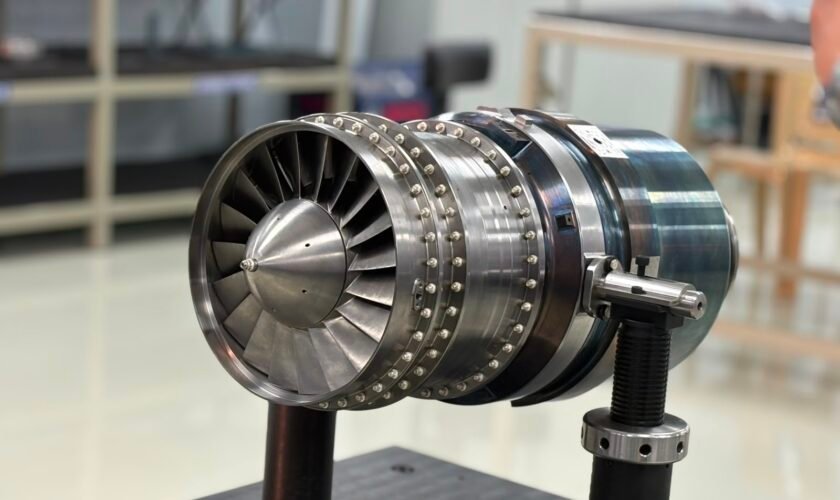
India Develops 350 kg Turbo Jet Engine

Turbo Jet Engine

New Delhi: The first indigenous Expendable Turbo Jet Engine of 350 kg thrust class, designed by DRDO’s Gas Turbine Research Establishment (GTRE), has been successfully developed. GTRE had identified Azad Engineering, Hyderabad as Industry partner for the manufacturing and assembly of the engine.

On July 22, 2026, the engine was successfully realised and delivered to GTRE by Azad Engineering, a landmark achievement for India’s aerospace and defence ecosystem. The delivery marks the culmination of years of precision engineering, advanced manufacturing, and close partnership between India’s scientific & industrial communities.

Mastered by only a handful of nations, jet engine technology is widely regarded as one of the most sophisticated engineering disciplines in the world, demanding exceptional precision, advanced metallurgy, and uncompromising manufacturing standards. Delivery of such complex system based on the design of DRDO reflects the growing technological capabilities of the Indian Defence Industry.

The engine was handed over to Distinguished Scientist & Director General (Aeronautical Systems) Dr K Rajalakshmi Menon and Outstanding Scientist and Director GTRE Dr SV Ramanamurty by CEO Azad Engineering Shri Rakesh Chopdar.

Defence Secretary and Secretary, Department of Defence R&D and Chairman, DRDO Shri Rajesh Kumar Singh complimented the partnership of GTRE and industry that has been instrumental in transforming the vision into a historic milestone.

read more
COVER STORYDRDO

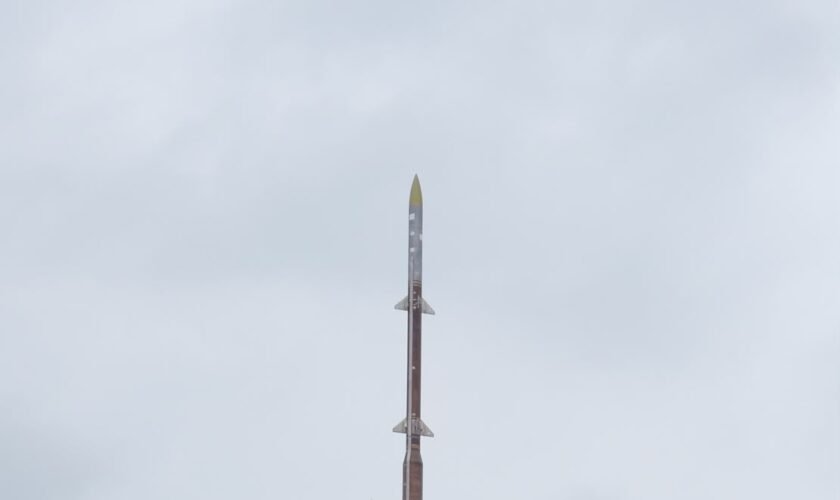
DRDO Tests Kusha Long-Range Missile

Kusha Long-Range Missile

New Delhi: Defence Research & Development Organisation (DRDO) successfully conducted the maiden flight-test of ‘Kusha’ Long-Range Surface-to-Air Missile from the APJ Abdul Kalam Island off the coast of Odisha on July 23, 2026. This maiden test was conducted against an electronic target simulating high-speed and high-altitude aerial threat which was successfully intercepted by the missile system.

The ‘Kusha’ missile system is capable of neutralising a wide variety of aerial threats including fighter jets, missiles, unmanned aerial vehicles and large enemy aircraft within a wide range & altitude envelope. All weapon system elements, including the missiles, radars, command and control centre, have been developed by various DRDO laboratories and Industry partners.

Raksha Mantri Shri Rajnath Singh stated that the successful test-flight of ‘Kusha’ marks an important milestone in Indian defence R&D, highlighting the capability in developing long range surface-to-air missile system, possessed only by a handful of nations. This, he added, will also eliminate the import dependency for such systems and signifies a giant leap in air defence capability of the nation.

Defence Secretary and Secretary, Department of Defence R&D and Chairman, DRDO Shri Rajesh Kumar Singh monitored all activities during the launch and congratulated all the team members involved in the successful flight-test.

read more
COVER STORYDefence Industry & TechnologyDRDO

DRDO Successfully Tests Pinaka Long-Range Guided Rocket

DRDO Pinaka

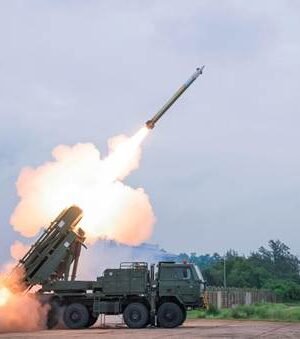
New Delhi: Defence Research & Development Organisation (DRDO) conducted a successful flight-test of Pinaka Long Range Guided Rocket (LRGR) at the Integrated Test Range (ITR), Chandipur on July 08, 2026. The rocket was tested for a user defined minimum range of 60 kms.

Demonstrating all in-flight manoeuvres as planned, the LRGR impacted on the target with textbook precision exactly following the predicted trajectory. All the deployed range instruments tracked the flight throughout its trajectory.

The Pinaka LRGR rocket is designed by Armament Research and Development Establishment in association with High Energy Materials Research Laboratory, with support from Defence Research and Development Laboratory and Research Centre Imarat. The flight-trial was coordinated by ITR and Proof & Experimental Establishment. The rocket was launched from the in-service Pinaka launcher demonstrating its versatility and providing launch capability of Pinaka variants of different ranges from the same launcher.

Raksha Mantri Shri Rajnath Singh has congratulated DRDO, the Indian Army and the industry on the successful flight-test. He described it as a major milestone in indigenous design and development capability for long range guided rockets.

Defence Secretary and Secretary, Department of Defence R&D and Chairman, DRDO Shri Rajesh Kumar Singh closely monitored the trials and complimented all the teams associated with the successful test.

read more
COVER STORYDefence Industry & TechnologyDRDO

Delegation of Financial Powers to DRDO 2026

Financial Powers
  • Raksha Mantri unveils major reform to enhance efficiency, accountability & timely execution of strategic R&D projects.
  • Revised framework will accelerate delivery of critical systems and foster stronger collaboration with industry & academia, says Raksha Mantri
  • DFP-2026 will reinforce Aatmanirbhar Bharat vision & strengthen defence preparedness.

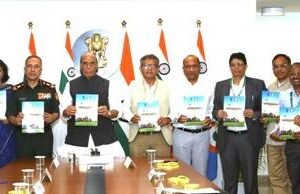
New Delhi: Raksha Mantri Shri Rajnath Singh, on June 29, 2026, released the Delegation of Financial Powers to DRDO (DFP-2026), a major reform to enhance efficiency, accountability, and timely execution of strategic R&D projects. The DFP-2026 will facilitate faster production and induction of systems, platforms & technologies emerging from the R&D ecosystem into the Defence Forces, stated Raksha Mantri, adding that the new framework will foster stronger collaboration with the industry and academia, reinforcing the vision of Aatmanirbhar Bharat. He furthered that the revised framework will contribute to enhanced self-reliance in defence technologies and strengthen the nation’s defence preparedness.

The DFP-2026 aims to significantly enhance functional empowerment at various levels within the Department of Defence R&D. The revised framework addresses several critical requirements, including dedicated financial provisions for trial campaigns, tests and evaluation activities, authorisation for sanctioning pre-project R&D initiatives, and clear segregation of financial powers for grants-in-aid pertaining to Extra-Mural Research Projects, Defence Innovation Accelerator-Centres of Excellence, and Technology Development Fund projects under the respective schedules.

Chief of Defence Staff General NS Raja Subramani; Defence Secretary and Secretary, Department of Defence R&D and Chairman DRDO Shri Rajesh Kumar Singh; Secretary (Defence Production) Shri Sanjeev Kumar; Secretary (Ex-Servicemen Welfare) Smt Sukriti Likhi; Controller General of Defence Accounts Shri Anugraha Narayana Das; DG (Naval Systems & Materials), DRDO Shri RV Hara Prasad; DG (Resources & Management) Dr Ravindra Singh; Additional Financial Advisor & JS Shri Ajeet Kumar Srivastava; Director, Directorate of Finance & Material Management Dr Maiya Din and other senior officials were present during the event in New Delhi.

read more
COVER STORYDefence Industry & TechnologyDRDO

DRDO conducts successful flight-test of Long Range Cruise Missile

Land Attack Cruise Missile

New Delhi: Defence Research & Development Organisation (DRDO) conducted a successful flight-test of Long Range Land Attack Cruise Missile (LRLACM) from Dr. APJ Abdul Kalam Island off the coast of Odisha on June 15, 2026. All the test objectives were fully met, as per the data captured by various tracking instruments deployed by Integrated Test Range, Chandipur.

The LRLACM is an indigenously developed missile with all sub-systems developed by various DRDO laboratories and Indian Industry partners. Aeronautical Development Establishment, Bengaluru is the Nodal Laboratory. The launch was witnessed by senior officials from DRDO and user representatives from the Indian Navy & the Indian Air Force.

Raksha Mantri Shri Rajnath Singh congratulated the DRDO team and the Industry Partners on the successful flight-test of LRLACM. Defence Secretary & Secretary, Department of Defence (R&D) and Chairman DRDO Shri Rajesh Kumar Singh monitored all activities during the launch. He congratulated all the team members involved in the successful flight-test.

read more
COVER STORYDRDO

DRDO demonstrates the nation’s next-gen Defence capabilities

New Delhi: Defence Research and Development Organisation (DRDO) has successfully demonstrated multiple crucial technologies bolstering the nation’s defence capabilities against different types of enemy threats.

Three consecutive flight-tests were conducted on June 10 & 11, 2026 to demonstrate multi-layered defence against long range ballistic missiles and anti-ship capability at medium range.

Multi-layered Ballistic Missile Defence (BMD) capability was successfully demonstrated. The interceptors successfully engaged their respective targets. The systems are designed and developed with latest technologies to address the emerging missile threats.

These tests have put the country in the elite group of nations having BMD capability to engage up to Intercontinental Ballistic Missiles. The maiden flight-test of the Naval Anti-Ship Missile-Medium Range (NASM-MR) was also carried out successfully. The flight-tests were witnessed by senior officials of DRDO and Defence Forces.

Raksha Mantri Shri Rajnath Singh has congratulated DRDO on successfully demonstrating these crucial technologies.

Secretary, Department of Defence R&D and Chairman DRDO Shri Rajesh Kumar Singh closely monitored the trials and applauded the combined efforts of DRDO and industry.

read more
Air ForceCOVER STORYDefence Industry & TechnologyDRDO

DRDO & IAF conduct successful flight-tests of RudraM-II

RudraM-II Air-to-Surface Missile

New Delhi: Defence Research & Development Organisation (DRDO) and the Indian Air Force (IAF) have conducted the successful flight-tests of RudraM-II Air-to-Surface Missile from an airborne platform. The tests were conducted under extreme release conditions with critical trajectory establishing the capability of all subsystems.

The missiles after release were guided to a predefined target with pin-point accuracy. All the test objectives were fully met as confirmed by the flight data captured by various range instruments deployed by Integrated Test Range (ITR), Chandipur.

Rudram-II has been indigenously developed by Research Centre Imarat, Hyderabad as the nodal DRDO laboratory in collaboration with other sister labs such as Defence Research and Development Laboratory, High Energy Materials Research Laboratory, Armament Research & Development Establishment & ITR.

Along with the Development cum Production Partners (DcPPs), agencies like Hindustan Aeronautics Limited, Regional Centre for Military Airworthiness, Missile System Quality Assurance Agency and many other industries have contributed significantly towards achieving this goal.

Raksha Mantri Shri Rajnath Singh has lauded the effort of DRDO, IAF, DPSUs, DcPPs and the industry for the successful flight-tests. He stated that the tests have demonstrated the growing maturity of indigenous defence technologies, contributing significantly to Aatmanirbharta in advance weapon systems.

read more
COVER STORYDRDOMILITARY

DRDO unveils Advanced Armoured Platforms

Advanced Armoured Platforms

New Delhi: The Advanced Armoured Platforms (Tracked and Wheeled), designed and developed by Vehicles Research & Development Establishment, were unveiled by Secretary Department of Defence (R&D) & Chairman DRDO Dr Samir V Kamat at the premises of the DRDO’s laboratory in Ahilyanagar, Maharashtra on April 25, 2026. The platforms have been developed to meet the emerging operational requirements of the Defence Forces.

Both the platforms have been integrated with indigenously designed & developed 30 mm Crewless Turret, with advanced features to meet the mobility, fire power and protection requirements.

Integrated with high power engine and automatic transmission, these platforms possess a high power to weight ratio, higher speed capabilities, gradient and obstacle negotiating capability, STANAG level 4 and 5 protection with modular blast and ballistic protection all around. Amphibian with improved water obstacle crossing capability by incorporating hydro jets provides operational flexibility.

The 30 mm crewless turret along with the 7.62 mm PKT gun is configured to launch Anti-Tank Guided Missiles as well. The base design has the capabilities to be configured for multiple roles. The indigenous content is to the tune of 65% with plans to increase it to 90%.

The manufacturing of the platforms has been carried out by two industry partners – TATA Advanced Systems Limited  and Bharat Forge Limited supported by many MSMEs. This collaboration has resulted in strengthening the evolving defence ecosystem.

The programme was attended by Distinguished Scientists and Directors General of Armament & Combat Engineering Systems (ACE); Production, Coordination and Services Interaction (PC&SI); CEO & MD, TASL Pun; Vice Chairman & Joint MD, BFL Pune & other industry representatives.

Directors and scientists of various DRDO labs, including Vehicles Research & Development Establishment, Armament Research & Development Establishment, Defence Metallurgical Research Laboratory, High Energy Materials Research Laboratory, Combat Vehicles Research and Development Establishment, Research & Development Establishment (Engineers) were also present.

read more