close

MILITARY

COVER STORYDefence Industry & TechnologyMILITARYTechnology

Raksha Mantri launches web-based project monitoring portal for Military Engineer Services

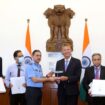
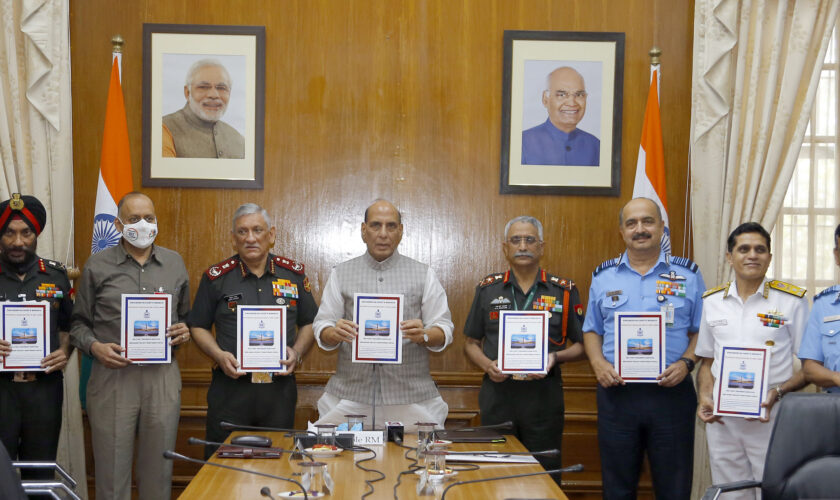
Raksha Mantri Shri Rajnath Singh launched Web Based Project Monitoring Portal (WBPMP) for Military Engineer Services (MES) at New Delhi on 20th October 2021. The portal conceptualized in accordance with the Digital India Mission of the Union Government, has been developed by Bhaskar acharya National Institute for Space Applications and Geo-informatics (BISAG-G).

The newly launched unified portal is the first project management-Governance to be implemented by the MES. It will enable real time monitoring of projects from its inception to completion. All stakeholders not only from MES but also Armed Forces users can gain access to the project information. This is one among many initiatives of MES for the scientific management of this organisation.

Raksha Mantri appreciated the initiative that has several advantages in monitoring the MES projects and congratulated it for going digital.

Taking forward the Digital India Mission, MES is also in process of implementing nine other e-Governance applications in an endeavor to increase productivity, build transparency and improve efficiency towards infrastructural development for the Army. These include Product Approval Portal, AWMP Scrutiny & Status Application, E-Measurement Book, Budget Management Portal, Work Estimation Application, Billing and Construction Account Management, Cashbook Management and Accounting System, Contractor and Consultant Enlistment Portal & E-Deviation. These applications are expected to be developed by the end of this year and also to be amalgamated into singular Enterprise Resource Planning (ERP) by mid of next year.

MES has also embraced State of the Art technologies in its projects such as the construction of high-rise residential accommodations, construction of state-of-the-art multi-speciality hospitals, provisioning of several run-way infrastructures, construction of specialised marine structures, central engineering services such as the water & sewage treatment plants etc.

Chief of Defence Staff& Secretary-Department of Military Affairs General Bipin Rawat, Chief of Army Staff General Manoj M Naravane, Chief of Air Staff Air Marshal Vivek Ram Chaudhuri, Defence Secretary Dr. Ajay Kumar, Chief of Integrated Defence Staff to the Chairman Chiefs of Staff Committee Air Marshal BR Krishna, Vice Chief of Naval Staff Vice Admiral Satish Namdeo Ghormade,E-in-C of MES Lt. Gen. Harpal Singh and Director General of Indian Coast Guard Krishnaswamy Natarajanwere also present at the launching ceremony for the WBPMP.
read more
COVER STORYDefence Industry & TechnologyMILITARYNavy

President’s Colour awarded to Naval Aviation – 2021

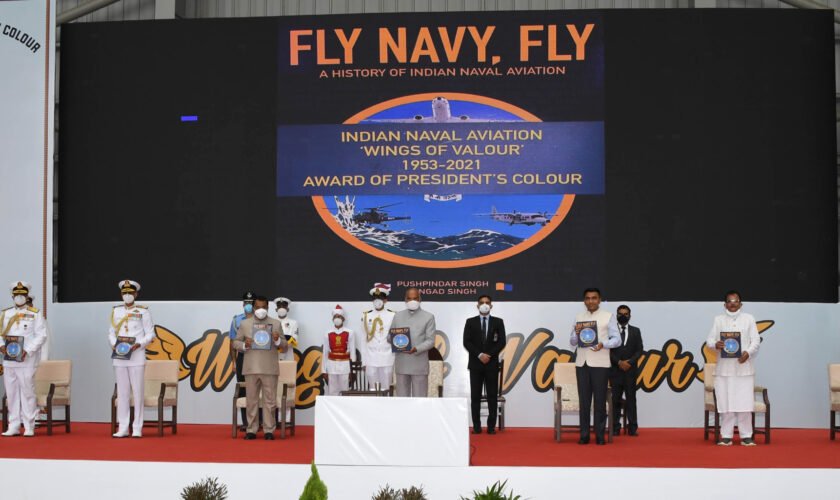
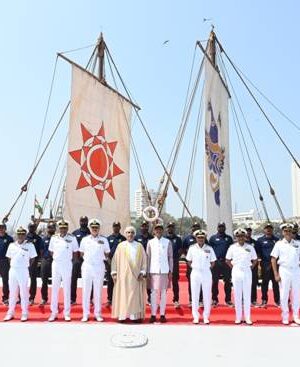
H.E. Mr. Ram Nath Kovind, the Hon’ble President of India, awarded the President’s Colour to Indian Naval Aviation at the ceremonial parade held at INS Hansa, Goa on 06 Sep 21. During the occasion, a Special Day Cover was released by the Postal Department. The ceremony was attended by the Governor of Goa, Raksha Mantri, Chief Minister of Goa, Chief of the Naval Staff several other civil and military dignitaries. The President’s Colour is the highest honour bestowed on a military unit in recognition of its exceptional service to the nation. The Indian Navy was the first amongst the Indian Armed Forces to be awarded the President’s Colour on 27 May 1951 by Dr Rajendra Prasad, the then President of India. Subsequent recipients of the President’s Colour in the Navy include Southern Naval Command, Eastern Naval Command, Western Naval Command, Eastern Fleet, Western Fleet, Submarine Arm, INS Shivaji and the Indian Naval Academy.

            Indian Naval Aviation came into being with acquisition of the first Sealand aircraft on 13 Jan 1951 and commissioning of INS Garuda, the first Naval Air Station, on 11 May 1953. Arrival of the armed Firefly aircraft in 1958 added an offensive punch, and the naval aviation steadily expanded its inventory to become an integral part of a formidable Navy. The year 1959 saw the commissioning of Indian Naval Air Squadron (INAS) 550 with 10 Sealand, 10 Firefly and three HT-2 aircraft. Over the years, a variety of rotary wing platforms have been added as well, ranging from the Alouette, the S-55, Seaking 42A and 42B; the Kamov 25, 28 and 31; the UH3H; the Advanced Light Helicopter and the latest in the line, the MH60R. Maritime reconnaissance (MR) also grew steadily with induction of the Super-Constellation from the Indian Air Force in 1976, the IL-38 in 1977 and the TU 142 M in 1989. Induction of Dornier 228 in 1991 and the state-of-the-art Boeing P 8I aircraft in 2013 marked the entry of modern high-performance MR aircraft.

            The world witnessed the Carrier arm of Indian Naval Aviation coming of age with the induction of INS Vikrant, the first Aircraft Carrier, in 1957 and integral Sea Hawk and Alize Squadrons subsequently. INS Vikrant with its aircraft played a crucial role in the liberation of Goa in 1961 and again in the 1971 Indo-Pak war, where its presence on the Eastern seaboard proved decisive. Induction of INS Viraat along with legendary Sea Harriers in the mid-1980s strengthened Carrier operations of the Navy, which transformed into a reckonable force with the arrival of MiG 29Ks on the mighty INS Vikramaditya in the last decade.  The Indian Navy’s Carrier capability received significant fillip with sea trials of the indigenously built aircraft carrier, the new avtaar of INS Vikrant, commencing this month.

            Today, Indian Naval Aviation boasts of nine air stations and three naval air enclaves along the Indian coastline and the in Andaman and Nicobar Islands. Over the past seven decades, it has transformed into a modern, technologically advanced and highly potent force with more than 250 aircraft comprising Carrier-borne fighters, maritime reconnaissance aircraft, helicopters and remotely piloted aircraft (RPA). The Fleet Air Arm can support naval operations in all three dimensions and will remain the first responder for maritime surveillance and HADR in the Indian Ocean Region. Naval aviation has distinguished itself during operations such as Op Cactus, Op Jupiter, Op Shield, Op Vijay and Op Parakram to name a few. It has also spearheaded HADR operations on behalf of the Indian Navy, providing relief to numerous IOR nations in addition to our countrymen, Op Castor in 2004, Op Sukoon in 2006, Op Sahayam in 2017, Op Madad in 2018, Op Sahayta in 2019 and the recently conducted rescue operations off Mumbai during Cyclone Tauktae in May 21 being examples.

            Naval Aviation has been at the forefront in inducting women into the fighting arm of the Navy, and making them work shoulder to shoulder with their male counterparts. Naval Aviators have been decorated with one Mahavir Chakra, six Vir Chakras, one Kirti Chakra, seven Shaurya Chakras, one YudhSeva Medal and a large number of Nao Sena Medals (Gallantry) over the years. Award of President’s Colour is testimony to the high professional standards and stellar operations performance of Naval Aviation, which has distinguished itself in service to the nation.

read more