close

Technology

COVER STORYDefence Industry & TechnologyTechnology

Raksha Mantri at National Defence Industries Conclave 2026

  • Indigenous drone production ecosystem must for strategic autonomy, defence preparedness & self-reliance”

  • Over 200 problem statements of Defence Forces, ICG, DSA and DPSUs unveiled as part of DISC 14 & ADITI Challenges 4.0

  • “676 start-ups/MSMEs/Innovators join defence innovation ecosystem through iDEX; 58 prototypes worth Rs 3,853 crore receive procurement clearance; 45 procurement contracts signed valued at Rs 2,326 crore”

  • “MSMEs are playing significant role in driving economic growth; need to embrace new tech to achieve Viksit Bharat goal”

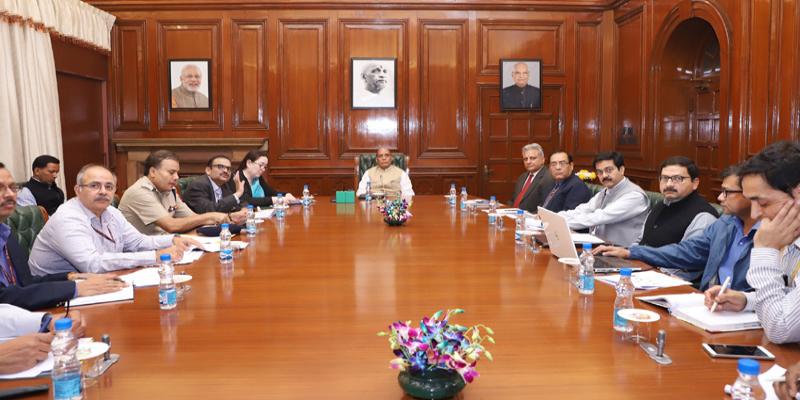
New Delhi: “India must work in a mission mode to emerge as a global hub of indigenous drone manufacturing in the next few years,” said Raksha Mantri Shri Rajnath Singh as he stressed on the urgent need to build a drone production ecosystem to ensure strategic autonomy, enhance defence preparedness and make the country Aatmanirbhar in view of the present geopolitical uncertainties. He was addressing MSMEs, start-ups, winners of Innovations for Defence Excellence (iDEX), Defence Public Sector Undertakings (DPSUs), private defence companies, innovators, policymakers, and academia during the inaugural session of the two-day National Defence Industries Conclave, organised by the Department of Defence Production on the theme ‘Advanced Manufacturing Technologies’ at Manekshaw Centre, New Delhi on March 19, 2026.

Raksha Mantri asserted that the ongoing conflicts, ranging from the Russia-Ukraine war to the tensions between Iran & Israel, are proof that drones and counter-drone technologies are destined to play a pivotal role in future warfare, and self-reliance in drone manufacturing is essential not merely at the product level, but at the component level as well. “From the drone’s molds to its software, engines, and batteries, everything must be manufactured in India. This is no easy task. In most countries where drones are manufactured, a significant number of critical components are currently imported from China,” he said.
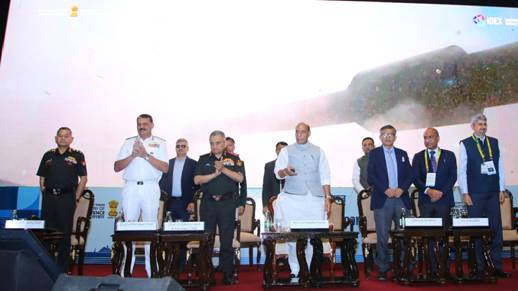
Shri Rajnath Singh added that while the creation of any nation’s defence industrial ecosystem relies on the contributions of large industries, MSMEs, start-ups, and innovators, it is equally driven by a clear policy push from the government, tailored to meet the country’s specific defence requirements. While he called for active contribution of the private sector, he extended Prime Minister Shri Narendra Modi-led Government’s full support to transform India into a global hub for indigenous drone manufacturing.

As part of the inaugural session, Raksha Mantri launched the 14th edition of Defence India Start-up Challenge (DISC-14) and the 4th edition of ADITI challenges under the iDEX framework. A total of 107 problem statements, including 82 under DISC-14 & 25 under ADITI Challenges 4.0, from the Defence Forces, Indian Coast Guard and Defence Space Agency were launched to promote breakthrough innovations in various domains.

A new initiative featuring 101 innovation challenges from DPSUs was also launched by Raksha Mantri to encourage design-led innovation by MSMEs and start-ups. These challenges are funded by DPSUs, which will also provide mentorship, testing facilities and opportunities for potential integration into their supply chains to the winning start-ups.

Shri Rajnath Singh described iDEX and ADITI (Acing Development of Innovative Technologies with iDEX as game-changer initiatives, through which start-ups, innovators, and MSMEs are provided with the opportunity to develop novel solutions to meet the specific requirements of the Defence Forces. “As of February 2026, approximately 676 start-ups, MSMEs, and individual innovators have joined the defence innovation ecosystem since the inception of iDEX in 2018. 548 contracts have been signed; and 566 challenges launched. Of these, 58 prototypes have received clearance for procurement, valued at around Rs 3,853 crore. Furthermore, 45 procurement contracts have already been signed, worth nearly Rs 2,326 crore. These figures demonstrate that innovation is gradually materialising into tangible products & technologies, and the role played by our start-ups & MSMEs in this transformation is steadily gaining strength,” he said.

Raksha Mantri emphasised that MSMEs are today actively engaged in fields such as Artificial Intelligence, Robotics, Automation, and Advanced Manufacturing, representing a monumental and positive transformation. He termed it as imperative for the MSMEs and start-ups to embrace and integrate these technologies to ensure the optimal utilisation of their resources and capabilities. “In the contemporary landscape, innovations such as Automation, Artificial Intelligence, Robotics, and Additive Manufacturing are reshaping the global manufacturing sector. Furthermore, technologies like ‘Digital Twins’ and advanced simulation tools are unlocking a host of new possibilities. A ‘Digital Twin’ essentially involves creating a virtual model of a real-world system. Such technologies empower us to better comprehend complex systems and facilitate more informed decision-making,” he said.

Shri Rajnath Singh added that ‘integration’ is another crucial concept for the enhancement of MSME capabilities. “This integration can be achieved in two distinct ways: Horizontally and Vertically. Horizontal integration implies that MSMEs from diverse sectors connect with one another, learn from each other’s experiences, and collaborate. Vertical integration signifies that MSMEs partner with large-scale industries, engage with emerging technological domains, and cultivate expertise in fields such as Artificial Intelligence, Automation, Robotics, and Additive Manufacturing. Our MSMEs must advance towards the adoption of Industry 4.0. It is when both horizontal and vertical integration occur simultaneously that a robust innovation ecosystem is established,” he said.
Highlighting the numerous initiatives undertaken by the Government to strengthen the MSMEs, Raksha Mantri stated that a three-pronged approach has been introduced in this year’s Union Budget to provide MSMEs with Equity, Liquidity, and Professional support, thereby enabling them to emerge as ‘Champion MSMEs’. The objective is to accelerate the growth of MSMEs, and enhance their competitiveness in both domestic and international markets, he said.

Shri Rajnath Singh pointed out that since 2014, the Government has consistently prioritised and focused on the expansion of this “vital” sector. To simplify the registration and identification of MSMEs, digital platforms such as the Udyam Portal and the Udyam Assist Portal have been launched. The objective is to integrate small industries into the formal economy, thereby ensuring that they receive the benefits of government schemes.” he said. He added that the number of MSMEs in the country stood at approximately 4.67 crore in 2012-13, and the figure has reached nearly 08 crore, according to recent data. This growth, he said, demonstrates the continuous rise in the spirit of entrepreneurship within the country, and small industries are now playing a significant role in driving economic growth.

“We see start-ups serving as catalysts for social change through their truly unique ideas, while others attain the coveted status of a ‘Unicorn’ within an incredibly short span of time. In the near future, many more will emerge as the next generation of ‘Unicorns’. All that is required is consistent effort, perseverance, and unwavering dedication,” said Raksha Mantri, urging the MSMEs and start-ups to march forward with zeal & enthusiasm to innovate, embrace new technologies, and realise the vision of Aatmanirbhar Bharat and Viksit Bharat.

Speaking on the occasion, Secretary (Defence Production) Shri Sanjeev Kumar highlighted that the conclave aims to promote advanced manufacturing technologies, and integration of MSMEs in the production ecosystem and entire value chain starting from design, development and manufacturing. He added that the 200 Problem Statements will give an opportunity to MSMEs, industries, start-ups, young innovators in designing state-of-the-art products and enhance their skills.

The Secretary (DP) enumerated the series of steps taken by the Ministry to promote and strengthen the domestic defence industry during 2025 – Year of Reforms. “DDP implemented significant reforms including rationalisation and simplification of various approvals and permissions; strengthening of quality process and bringing testing laboratories belonging to DPSUs and DRDO. A digital database of industries working in the defence sector, named Srijan Deep, has also been created, wherein over 40,000 industries have been listed to increase the resource for R&D,” he said.

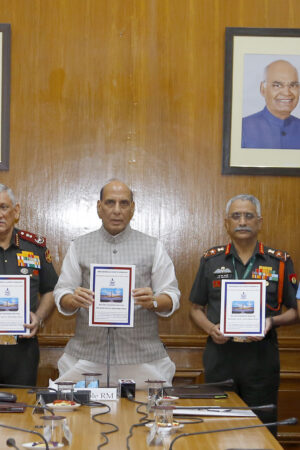
During the event, Raksha Mantri also released 05 publications of Department of Defence Production, which aim to strengthen awareness of policy initiatives, promote defence exports and facilitate ease of doing business for industry stakeholders. These are:

SAMARTHYA 2026 – A Journey Towards Self-Reliance in Defence Production: A document outlining the roadmap and key initiatives to strengthen self-reliance in defence manufacturing.

Indian Defence Industry – Going Global: A report highlighting India’s growing defence exports and opportunities for Indian companies in the global market.

SANKLAN: A handy guide providing answers to common queries of defence companies and MSMEs.

Enabling Provisions to integrate MSMEs in Defence PSU ecosystem: A booklet outlining new measures to integrate MSMEs into the DPSU ecosystem.

AI Maturity Assessment Model: A framework to help defence organisations assess and improve their adoption of Artificial Intelligence technologies.

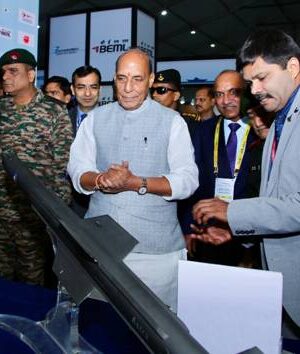
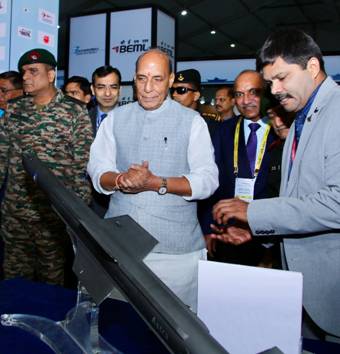
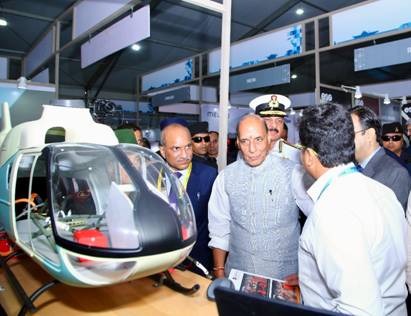
Shri Rajnath Singh also inaugurated an exhibition, wherein 20 large defence companies have set up their stalls to showcase their initiatives and programmes for co-opting MSMEs as partners, suppliers and innovators. In addition, 24 Indian and foreign companies are participating in the exhibition to display advanced manufacturing technologies such as automation, artificial intelligence, robotics, additive manufacturing and smart materials.
read more
COVER STORYDefence Industry & TechnologyTechnology

Defence HQ Training Institute Earns “Ati Utkrishth” NSCSTI Rating

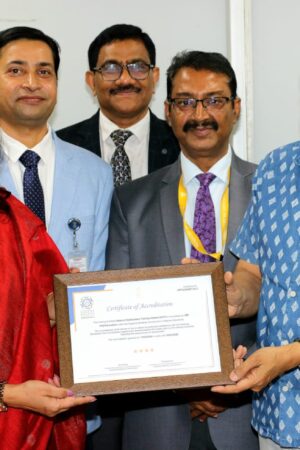
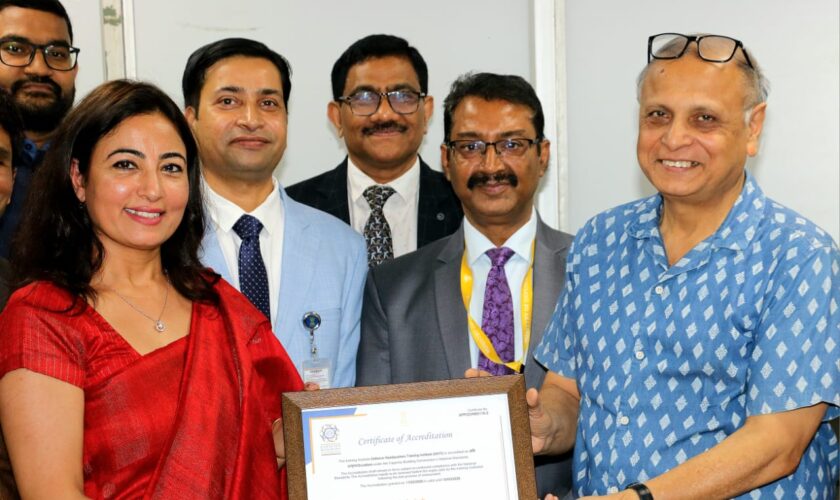
New Delhi: Defence Headquarters Training Institute (DHTI), Ministry of Defence has achieved a significant milestone by securing “Ati Utkrishth” (4-Star) accreditation under the National Standards for Civil Services Training Institutions (NSCSTI) framework. This marks a substantial advancement from its earlier “Uttam” (1-Star) rating during the previous accreditation cycle held two years ago.

As part of the accreditation review process, a four-member NSCSTI assessment team conducted an onsite inspection of DHTI on 10–11 March 2026.

The assessment team examined institutional records, training documentation, infrastructure, governance mechanisms, academic processes, and compliance materials in accordance with the prescribed NSCSTI framework.

The enhanced accreditation underscores DHTI’s sustained commitment to strengthening institutional systems, improving the quality of training, and adopting best practices in capacity building, in alignment with the Government of India’s broader vision of civil services capacity development under Mission Karmayogi.

read more
COVER STORYDefence Industry & TechnologyTechnology

Union Minister Dr. Jitendra Singh Affirms Fast-Track Nuclear Expansion

  • Dr. Jitendra Singh Assures Kudankulam Units 3–6 on Track, Safe from Geopolitical Shifts; No Delay or Cost Escalation Expected.
  • Dr. Jitendra Singh informed RS: Jaitapur Nuclear Power Project Talks Progressing; 6×1600 MW Framework Ready, Commercial Issues Under Discussion
  • “India Not Solely Dependent on External Uranium; Nuclear Capacity Doubled Since 2014, Targets 22 GW by 2032 and 100 GW by 2047 with Duty Exemptions Till 2035”
  • Dr. Jitendra Singh Clarifies 50% Power to Host State Under Gadgil Formula; ‘Safety First, Production Next’ Doctrine and Balanced Nuclear Allocation Policy Reiterated

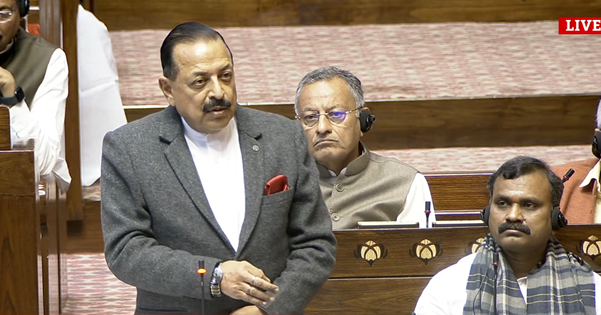
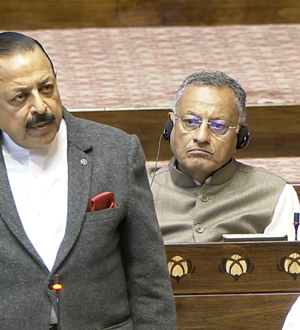
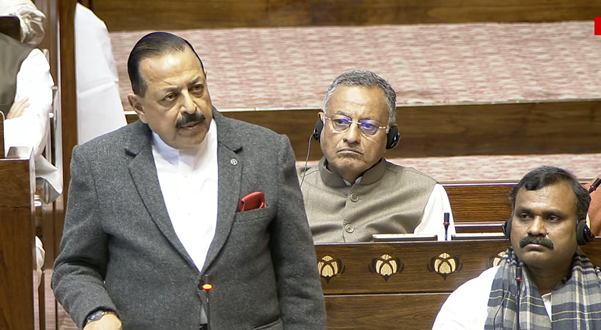
New Delhi: Union Minister of State (Independent Charge) for Science & Technology, Earth Sciences, and MoS PMO, Personnel, Public Grievances, Pensions, Atomic Energy and Space, Dr. Jitendra Singh, today asserted in the Rajya Sabha that India’s nuclear energy programme is in a decisive expansion phase, backed by policy reforms, private sector participation and clearly defined capacity targets extending up to 2047.

The Minister said India’s installed nuclear capacity, which stood at 4,780 MW in 2014, has risen to 8,780 MW and is projected to reach 22,380 MW by 2031–32, 47 GW by 2037, 67 GW by 2042 and 100 GW by 2047. He affirmed that India is moving forward with self-reliance and confidence, and that geopolitical developments will not derail ongoing nuclear projects.

Replying to supplementaries raised by R. Girirajan, Jairam Ramesh, Ram Gopal Yadav and M. Thambidurai, the Minister addressed concerns relating to timelines, international negotiations, fuel security, CSR initiatives, and power-sharing arrangements.

Responding to questions on the Kudankulam Nuclear Power Plant, Dr. Jitendra Singh said Units 3 and 4 are targeted for completion by 2026–27, while Units 5 and 6 are scheduled by 2030. He stated that there is no reason to apprehend any disruption due to recent geopolitical developments, including shifts in India–US relations.

Tracing the project’s history, he said the Kudankulam project was conceived in 1988, construction began in 2002, and the first unit became operational in December 2014 after the present government assumed office. The subsequent operationalisation of the first two units within the last decade reflects a clear implementation framework and disciplined adherence to timelines.

On a query regarding Corporate Social Responsibility initiatives within the 16-kilometre emergency planning zone, the Minister said that the Nuclear Power Corporation of India Limited undertakes CSR and Rehabilitation & Resettlement (R&R) activities for communities around all nuclear facilities.

He informed the House that significant allocations have been made under CSR, with ₹168 crore spent in the current financial year across projects. Specific figures for Kudankulam over the last four years would be furnished separately. He added that such initiatives focus on infrastructure, healthcare, education and skill development for local communities.

Addressing a question on negotiations concerning the proposed six 1600 MW reactors at Jaitapur Nuclear Power Project, Dr Jitendra Singh said that discussions have been ongoing and that while the technical agreement framework is in place, certain commercial aspects remain under consideration. He indicated that the matter is being pursued in coordination with relevant ministries, keeping national interest paramount.

On concerns regarding uranium imports and possible supply disruptions in a volatile global environment, Dr. Jitendra Singh stated that India has strengthened its energy security significantly over the last decade. He said nuclear capacity has more than doubled since 2014 and that policy measures, including recent enabling provisions and duty exemptions for nuclear plant equipment imports up to 2035, are aimed at accelerating domestic capability. He said the expansion roadmap demonstrates that India is not dependent solely on external sources and is steadily enhancing indigenous potential.

Responding to questions on power allocation, the Minister said distribution of electricity generated from nuclear plants follows the long-standing Gadgil formula, under which 50% of power is retained by the host state, 35% is allocated to neighbouring states and 15% goes to the central grid. This mechanism ensures balanced regional distribution.

On safety concerns and past apprehensions in the Kudankulam region, the Minister reiterated that India’s nuclear programme operates on the principle of “Safety First, Production Next.” He clarified that allegations regarding centralized storage of spent fuel at Kudankulam were scientifically unfounded, as each reactor manages its own specific fuel cycle.

Dr. Jitendra Singh concluded that the government has instituted clear timelines for nuclear expansion and is implementing them in a structured and disciplined manner, positioning nuclear energy as a key pillar of India’s long-term energy transition strategy.

read more
COVER STORYDefence Industry & TechnologyMILITARYTechnology

Raksha Mantri launches web-based project monitoring portal for Military Engineer Services

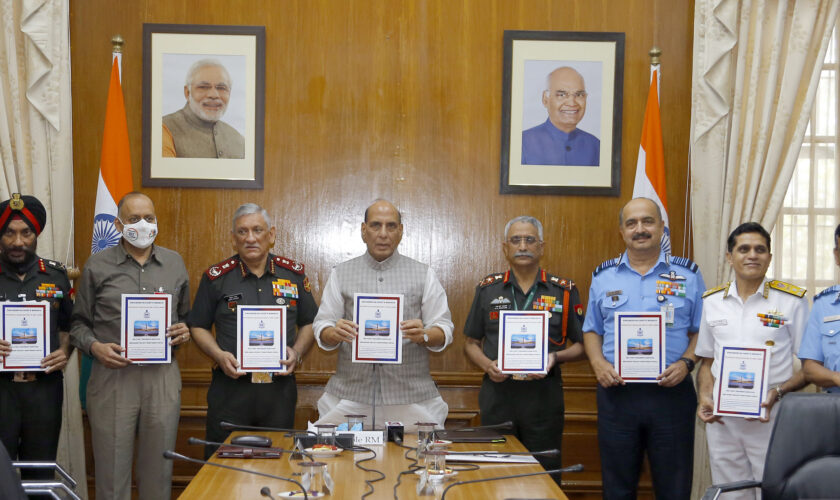
Raksha Mantri Shri Rajnath Singh launched Web Based Project Monitoring Portal (WBPMP) for Military Engineer Services (MES) at New Delhi on 20th October 2021. The portal conceptualized in accordance with the Digital India Mission of the Union Government, has been developed by Bhaskar acharya National Institute for Space Applications and Geo-informatics (BISAG-G).

The newly launched unified portal is the first project management-Governance to be implemented by the MES. It will enable real time monitoring of projects from its inception to completion. All stakeholders not only from MES but also Armed Forces users can gain access to the project information. This is one among many initiatives of MES for the scientific management of this organisation.

Raksha Mantri appreciated the initiative that has several advantages in monitoring the MES projects and congratulated it for going digital.

Taking forward the Digital India Mission, MES is also in process of implementing nine other e-Governance applications in an endeavor to increase productivity, build transparency and improve efficiency towards infrastructural development for the Army. These include Product Approval Portal, AWMP Scrutiny & Status Application, E-Measurement Book, Budget Management Portal, Work Estimation Application, Billing and Construction Account Management, Cashbook Management and Accounting System, Contractor and Consultant Enlistment Portal & E-Deviation. These applications are expected to be developed by the end of this year and also to be amalgamated into singular Enterprise Resource Planning (ERP) by mid of next year.

MES has also embraced State of the Art technologies in its projects such as the construction of high-rise residential accommodations, construction of state-of-the-art multi-speciality hospitals, provisioning of several run-way infrastructures, construction of specialised marine structures, central engineering services such as the water & sewage treatment plants etc.

Chief of Defence Staff& Secretary-Department of Military Affairs General Bipin Rawat, Chief of Army Staff General Manoj M Naravane, Chief of Air Staff Air Marshal Vivek Ram Chaudhuri, Defence Secretary Dr. Ajay Kumar, Chief of Integrated Defence Staff to the Chairman Chiefs of Staff Committee Air Marshal BR Krishna, Vice Chief of Naval Staff Vice Admiral Satish Namdeo Ghormade,E-in-C of MES Lt. Gen. Harpal Singh and Director General of Indian Coast Guard Krishnaswamy Natarajanwere also present at the launching ceremony for the WBPMP.

read more
Civil AviationCOVER STORYDefence Industry & TechnologyDronesTechnology

Shri Jyotiraditya M. Scindia flags off the Doon Drone Mela 2021 in Uttarakhand

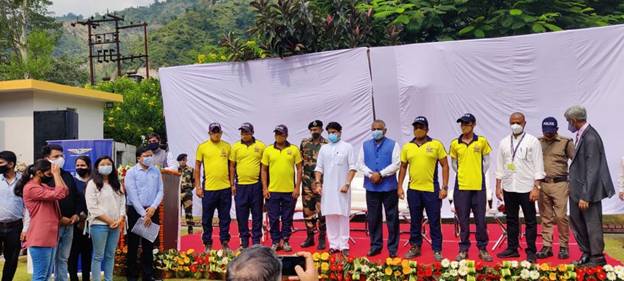
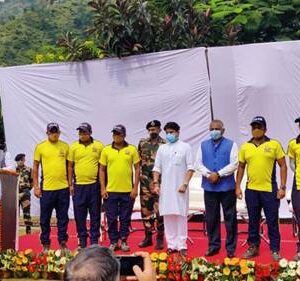
Union Minister of Civil Aviation, Shri Jyotiraditya Scindia along with the Minister of State in the Ministry of Civil Aviation, General (Retd.) Dr. V.K. Singh flagged off the Doon Drone Mela 2021 in Dehradun, Uttarakhand.Shri Scindia flagged off the event with a paragliding demonstration and also interacted with the drone companies exhibiting their prototypes at the Doon Drone Mela.

On the occasion, Shri Scindia said, “We recognise the immense opportunities which usage of drones bring in. The Government of India is working towards enabling the same with a liberalized drone policy and the launch of the Production Linked Incentive (PLI) Scheme. We insist that the Uttarakhand Government works towards developing Dehradun as an Aerosports and Drone Hub of India,” said Shri Jyotiraditya Scindia.”

Shri Amber Dubey, Joint Secretary, MoCA along with other senior officials of the MoCA were also present at the launch. Moreover, the other attendees of the program included students and personnel from the Local Police Force, State Disaster Response Force, Wildlife Institute of India, UPES – University of Petroleum and Energy Studies, IMS Unison University, Information Technology Development Agency, ITDA Dehradun, and various dignitaries from the Indian Drone Industry.

The day marked the demonstration of the Drone & Aerosports Demonstrations that included a paragliding demonstration by the Border Security Force, a Paramotor demonstration by Harsh Sachan, and an agriculture spraying drone demonstration by IoTechWorld Aviation & Dhaksha. Furthermore, the event also included an emergency search & response drone demonstration with an indigenously 3D-printed drone by the Drone Application and Research Centre (DARC) & State Disaster Response Force (SDRF). It was followed by a brief survey drone demonstration by the Aarav Unmanned Systems (AUS) under the SVAMITVA Scheme along with a training drone demonstration by Sqn Ldr Varsha Kukreti (Retd.).

read more
COVER STORYDefence ExpoDefence Industry & TechnologyTechnology

DefExpo-2022 preparations at Kevadia, Gujarat

Defence Minister, Mr. Rajnath Singh reviewed the DefExpo-2022 preparations at Kevadia, Gujarat

Said, all efforts will be made to increase domestic & international participation

Our aim is to ‘Make in India, Make for the World’: Raksha Mantri

Expresses confidence that India will soon become global defence manufacturing hub

The event to be held in Gandhinagar between March 10-13, 2022.

Defence Minister-level Conclave, Hybrid events, live demonstrations & business seminars being planned
Aim is to achieve self-reliance in defence & increase exports. To make India a major destination of land, naval, air & homeland security systems and defence engineering

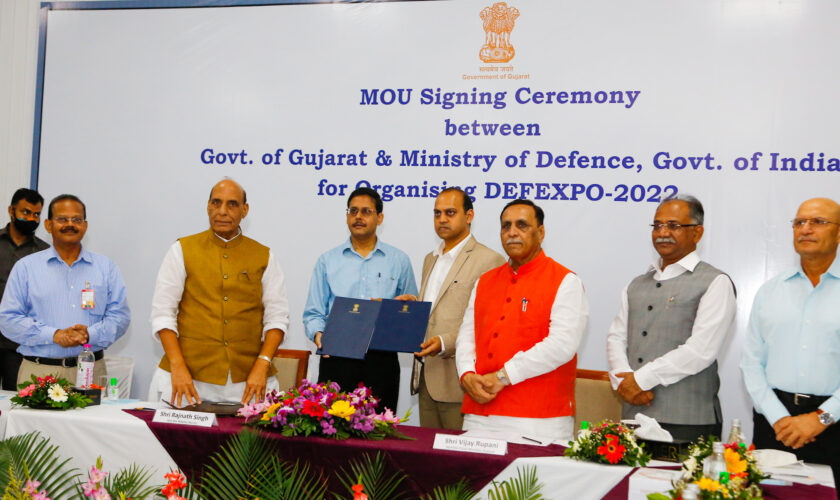
Raksha Mantri Shri Rajnath Singh and Gujarat Chief Minister Shri Vijay Rupani jointly reviewed the preparations of DefExpo-2022, at Kevadia, Gujarat on September 02, 2021. The 12th edition of DefExpo, which is India’s flagship event showcasing the land, naval, air as well as homeland security systems, will be held in Gandhinagar, Gujarat between March 10-13, 2022.

During the meeting, Shri Rajnath Singh and senior officials of Ministry of Defence & Gujarat Government noted that the previous edition of DefExpo, which was held at Uttar Pradesh capital Lucknow in February 2020, was a tremendous success due to the seamless jointmanship between Government of India and the State Government. It was agreed that as DefExpo-2022 is coinciding with the 75th year of Independence, being celebrated as ‘Azadi Ka Amrit Mahotsav’, the event needs more active participation and synchronised efforts at all levels.

Expressing satisfaction at the ongoing preparations, the Raksha Mantri urged all the stakeholders to ensure maximum participation in the upcoming event. He hoped that not just domestic but international representation will be much greater at DefExpo-2022 than its previous edition. Reiterating the resolve of the Government to ‘Make in India, Make for the World’, Shri Rajnath Singh expressed confidence that India will soon become a global manufacturing hub. “We are taking big strides towards ‘Aatmanirbhar Bharat’ as envisioned by our Prime Minister Shri Narendra Modi. We will soon achieve self-reliance in defence. Our aim is to reduce dependency on imports and increase defence exports,” he said.
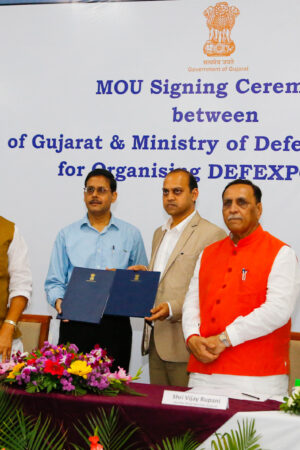
On the occasion, an MoU was signed between Ministry of Defence and Gujarat Government for organising DefExpo-2022, in the presence of Shri Rajnath Singh. The DefExpo-2022 will be a hybrid business event, with the exhibition planned at the Helipad Exhibition Centre and seminars at Mahatma Mandir Convention and Exhibition Centre. A live demonstration of weapons & defence platforms is also being planned at the Sabarmati River Front in Ahmedabad.

Secretary (Defence Production) Shri Raj Kumar, Additional Chief Secretary Industries & Mines, Gujarat Dr Rajiv Kumar Gupta, Joint Secretary (Aerospace) Shri Chandraker Bharti, Industries Commissioner and Chairman iNDEXTb Dr Rahul B Gupta were among those present in the review meeting.

The aim of DefExpo-2022 is to build upon the vision to achieve ‘Aatmanirbharta’ in defence and reach USD five billion defence exports target by 2024. The objective is to make India a major destination of land, naval, air & homeland security systems and defence engineering. Keeping with future warfare in mind, the event aims to recognise the impact of disruptive technologies on conflicts and its consequent impact on the equipment and platforms required.

The DefExpo-2022 will be organised keeping with the COVID-19 protocols and aims to ensure maximum international and domestic participation. The events planned include:
• A conclave at the level of Defence Minister to accelerate decision making process.
• A hybrid system for attendees to join the events virtually and participate in seminars, hold B2B meetings, view products and exchange ideas/business propositions, etc.
• Live demonstrations by the Services, Defence Public Sector Undertakings and industry to showcase land, naval, air and homeland security systems.
• Business seminars by both international and Indian industry chambers to capture the intellectual capital of renowned subject matter experts.
• The Gujarat Government aims to utilise the opportunity to further its aerospace & defence vision and seek foreign investments.

The DefExpo, the premier event in the international aerospace and defence calendar, has witnessed year-on-year growth, both in the quantity and quality of participation. The DefExpo 2020 had the exhibition expanse of over 75,000 square metres, with participation of more than 1,000 exhibitors. The event also witnessed participation of 70 nations with presence of Defence Ministers of 40 different countries. Two hundred partnerships were forged during the event that provided tremendous boost and visibility to the Uttar Pradesh Defence Industrial Corridor. Over 12 lakh people visited the event, with a unique tent city accommodation being another feature.

In February 2021, India was the first country to conduct a hybrid aerospace exhibition, Aero India-2021 at Bengaluru, in compliance with strict COVID-19 protocols. The event, under the aegis of Department of Defence Production, Ministry of Defence, had witnessed tremendous global response.

read more
COVER STORYDefence Industry & TechnologyTechnology

Defence Acquisition Council headed by Raksha Mantri approves proposals of value Rs.13,165 cr.

Strengthening India’s Defence Capabilities

In a significant move towards modernizing India’s armed forces, the Defence Acquisition Council (DAC), chaired by Raksha Mantri Shri Rajnath Singh, has approved capital acquisition proposals amounting to ₹13,165 crore. This decision underscores India’s commitment to enhancing its defence preparedness while promoting indigenous manufacturing under the ‘Aatmanirbhar Bharat’ initiative.

Key Approvals

The DAC’s latest approvals include several crucial procurements aimed at bolstering the operational capabilities of the Indian Army and Navy. Some of the major acquisitions include:

  • 25 Advanced Light Helicopters (ALH) Mark III – Procured from Hindustan Aeronautics Limited (HAL) at an estimated cost of ₹3,850 crore. These helicopters will significantly improve the Army’s lift capability and operational readiness.
  • Rocket Ammunition Procurement – The council has sanctioned the purchase of Terminally Guided Munition (TGM) and HEPF/RHE Rocket Ammunition under the Buy (Indian-IDDM) category, amounting to ₹4,962 crore. This move aims to boost indigenous design and development of advanced weaponry.
  • Additional Defence Proposals – Other approvals worth ₹4,353 crore include modernization initiatives and amendments to the Defence Acquisition Procedure (DAP) 2020, ensuring streamlined procurement processes and efficiency.

Focus on Indigenous Defence Manufacturing

A remarkable 87% of the total approved procurement will be sourced from domestic manufacturers, reinforcing India’s push for self-reliance in defence production. This decision aligns with the government’s vision of reducing dependency on foreign suppliers and fostering innovation within the Indian defence sector.

Conclusion

The DAC’s latest approvals mark a significant step in strengthening India’s defence capabilities while supporting indigenous industries. With a focus on modernization, efficiency, and self-reliance, these acquisitions will play a crucial role in ensuring the operational readiness of the Indian Armed Forces.

read more