close

COVER STORY

AerospaceCOVER STORYSpace & Missiles

PARLIAMENT QUESTION: GAGANYAAN MISSION

Explore the Gaganyaan mission and its significance in Parliament discussions for 2025. Stay informed on India's space exploration plans.

The following is the current status & key milestones achieved in Gaganyaan Programme:

New Developments

Human Rated Launch Vehicle (HLVM3): Development and ground testing completed.

Orbital Module: Propulsion systems for Crew Module and Service Module developed and tested. ECLSS engineering model realized.

Crew Escape System (CES): 5 types of motors developed and static tested.

Infrastructure established: Orbital Module Preparation Facility, Gaganyaan Control Centre, Gaganyaan Control facility, Crew training facility, Second Launch pad modifications.

Precursor Missions: A Test Vehicle developed for validating CES and flight tested in TV-D1. Activities are in progress for TV-D2 and IADT-01.

Flight Operations and Communication Network: Ground network configuration finalized. IDRSS-1 feeder stations and terrestrial links established.

Crew Recovery Operations: Recovery assets finalized. Recovery Plan worked out.

First Uncrewed Mission (G1):  C32-G stage and CES motors realized. HS200 Motors and CES Fore end up to Crew Module Jettisoning Motor stacked. Crew Module and Service module structure realized. Crew Module Phase-1 checks completed.

The human spaceflight programme is aimed at fulfilling aspirations of an established space fairing nation. The technological and manufacturing capabilities towards the goal of ‘Viksit Bharat’ will hinge on a transformative shift in the national research and technology development landscape. After proving the basic capabilities for human space activities under Gaganyaan Programme, the next logical step is to initiate the development activities for a human habitat or a space station in the low earth orbit to enable longer human space missions. In this regard, the long-term vision of Indian Human Space Programme includes Bharatiya Antariksha Station (BAS) by 2035 and Indian Moon Landing by 2040.

Plans for establishing five modules of Bharatiya Antariksha Station (BAS) by 2035 towards which approval for development of 1st module of BAS is obtained.

As per the vision envisaged by Government of India to land an Indian on moon by 2040, the mission aspects, configuration of launch vehicle and orbital module systems have been taken up.

Training modules including incremental training for the ongoing Gaganyaan programme and proposed landing of an Indian on Moon is in line with the requirement of mission timelines.

This information was given by Dr. Jitendra Singh, Union Minister of State (Independent Charge) for Science and Technology, Earth Sciences, MoS PMO, MoS Personnel, Public Grievances & Pensions, Department of Atomic Energy and Department of Space, in a written reply in the Lok Sabha today.

read more
COVER STORYDefence Industry & TechnologyMILITARY

Indo-UK Tri-Service Exercise ‘Konkan Shakti 2021’ Concludes

Uncover the highlights of the Indo-UK Tri-Service Exercise 'Konkan Shakti 2021' as it concludes, showcasing enhanced military collaboration and strategic partnerships.

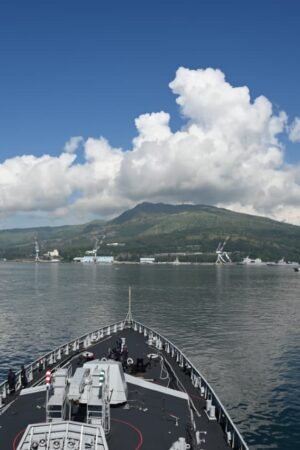
The maiden bilateral tri-service exercise, Konkan Shakti 21, between the armed forces of India and the UK culminated in the Arabian Sea on 27 October 2021. Smooth execution of the first edition of the exercise is testimony to the professional abilities, mutual understanding and shared commitment of the two nations and their personnel in uniform. 

Spanning over four days, the exercise saw the two defence forces work in cohesion through a series of complex multi-service combat drills in all domains of maritime operations – air, surface and sub-surface. Drills undertaken during the exercise involved ‘replenishment at sea’ practice, Strike Operations by fighter aircrafts, Cross Control of helicopters, simulated induction of army troops, gun shoots on expendable air targets, advanced air and sub-surface exercises, composite helicopter formation fly-past and large force engagement involving fighter aircraft of the UK (F35B), Indian Navy (MiG 29K) and Indian Air Force (SU-30 and Jaguar), all of which reflected high synergy, professionalism and readiness of both nations to conduct joint maritime operations, when required. 

The exercise provided both forces the opportunity to share best practices and experiences with each other in a collaborative spirit that is particularly important in the complex and unpredictable global security environment. 

The culmination of the exercise was marked by the traditional steam past between ships of the two navies.

read more