




close

Aerospace

AerospaceCOVER STORYSpace & Missiles

STRATEGIES TO EXPAND INDIA’S SHARE IN THE GLOBAL SPACE ECONOMY

Delve into strategies designed to elevate India's role in the global space economy. Find out how innovation and collaboration can drive success.

With the landmark space reforms in 2020, The Government of India has liberalized the Indian space sector and constituted, Indian National Space Promotion and Authorization Centre (IN-SPACe), an autonomous, single-window, independent nodal agency in Department of Space (DoS), to facilitate and promote the participation of private players/Non-Government Entities (NGEs) across the entire spectrum of space activities.

IN-SPACe carried out a market study in collaboration with ISRO, NGEs and a leading consulting firm which resulted in development of a report titled ‘Decadal Vision and Strategy for the Development of the Indian Space Economy’ a strategic document crafted to steer India’s space industry and economic prospects in the next decade.

The decadal vision report outlines a roadmap aimed at fully realizing the potential of space technology to drive economic growth, foster innovation, and enhance global competitiveness. The envisaged growth will be realized, through focused strategic & enabling initiatives aimed at Demand generation, Capacity & Capability building, creating industrial ecosystem, Cross sectoral collaborations for R&D, enabling access to finance, talent creation & international outreach.

IN-SPACe has undertaken/enabled following strategic initiatives/actions (not limited to), which will converge towards achieving the decadal vision targets of $44 billion by 2033:

Providing Regulatory and Policy Framework for Indian Space Sector

Facilitation & Authorization of Space Activities & Ease of Doing Business for Non-Governmental Entities (NGEs)

Promoting & Enabling Transfer of Technology (ToT) to NGEs

Enabling Access to Critical Infrastructure & Technical Facilities

Public-Private Partnerships (PPP) for Earth Observation

Impetus to Manufacturing & Development of Manufacturing Clusters in States

ToT of Small Satellite Launch Vehicle (SSLV) to Industry

Financial Support Schemes for Space Startups and MSEs

Setting up of a Space Sector focused ₹1000 Cr Antariksh Venture Capital Fund

Skill Development & Space Courses for Talent pool creation

Access to Orbital Resources & Space Standards

Demand Generation Campaign for Adoption of Space Applications

Access to Finance & Investor Awareness Campaigns

International outreach and Space Diplomacy

These initiatives are strategically planned, regularly monitored, & periodically assessed, aligning with the current growth trajectory and evolving global market trends.

Indian space sector is poised to play a transformative role in the country’s technological and economic growth story, it must be positioned as a strategic enabler, not the sole engine of economic expansion. Space sector should be seen as a catalyst for broader sectoral development, not as a standalone pillar. For Balancing rapid expansion without getting over-reliant on Space sector or technologies, it is imperative to:

Position Space as an Enabler Across Sectors, it should be deeply integrated with agriculture, disaster management, urban development, logistics, climate action, defence, and digital services, which will distribute the risk of economic over-reliance.

Promote Cross-Sector Innovation & space-tech convergence with fields like AI, quantum computing, biotech, and green energy will ensure the gains are distributed and mutually reinforcing.

Promote a Balanced Innovation Portfolio with focus on nurturing a diverse technology ecosystem- supporting other high-growth sectors (semiconductors, electric mobility, fintech, etc.) alongside space, to ensure economic resilience even if space sector faces global market fluctuations.

Build Policy and Investment Guardrails, to ensure that fiscal and policy priorities remain balanced. While incentivizing space, equal emphasis should be placed on other sectors like- manufacturing, MSMEs, and green energy. Public-private investment strategies should avoid overconcentration of capital in any one sector.

India should use space to enable Socio-economic impact more distributed and inclusive, through a diversified innovation-led growth model, where space acts as an integrator and enabler. It will help to ensure that India’s economic trajectory remains balanced, resilient, and inclusive without risking over-reliance on any key sector or technologies.

This information was given by Dr. Jitendra Singh, Union Minister of State (Independent Charge) for Science & Technology, Minister of State (Independent Charge) for Earth Sciences, MoS PMO, Department of Atomic Energy and Department of Space, MoS Personnel, Public Grievances and Pensions, in a written reply in the Rajya Sabha today.
read more
AerospaceCOVER STORYSpace & Missiles

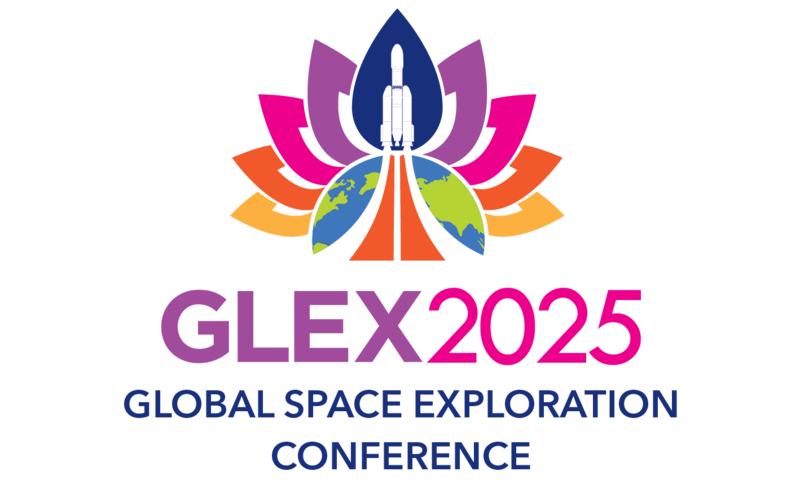
GLOBAL SPACE EXPLORATION CONFERENCE (GLEX 2025)

Join global leaders and innovators at GLEX 2025 to explore the future of space exploration. Discover groundbreaking ideas with experts.

The fourth edition of the Global Space Exploration Conference (GLEX-2025) was successfully held from 7th to 9th May 2025 at Yashobhoomi, New Delhi, co-hosted by the Indian Space Research Organization (ISRO) and the Astronautical Society of India (ASI) under the aegis of the International Astronautical Federation (IAF). With the theme “Reaching New Worlds: A Space Exploration Renaissance”, the event marked a milestone for India’s growing leadership in global space affairs and became the largest IAF Global Conference ever held, attracting more than 1,700 participants from 36 countries.

The primary objectives of GLEX 2025, were to foster international cooperation in space exploration, share technical and policy information, and discuss collaborative solutions and challenges.

GLEX 2025 featured 6 Plenary sessions, 3 Highlight Lectures, 8 Global Networking Forums and 650 Technical presentations comprising of oral and interactive presentation covering 15 thematic areas. The themes were:

International Cooperation, Challenges, and New Horizons

Lunar, Mars, Near-Earth Asteroids, Deep Space Exploration

Space Vehicles for Exploration & Propulsion for Deep Space

System Engineering and Long-Term Space Travel

Space Bioastronautics, Space Medicine, Life Support Systems

Microgravity Science and Experiments

Space Resources Utilisation and Space Economy

Sustainable Space Logistics & Key Technologies

Navigation, Guidance and Control for Deep Space Missions

Space Finance, Investment and Insurance

Space Policy, Sustainability and Legal Aspects

Space Stations & Challenges

Ground-Based Preparatory Activities

AI Impact & Autonomy on Space Exploration

Empowering the Next Generation of Space Explorers

The GLEX-2025 was organized by International Astronautical Federation (IAF) and jointly hosted at New Delhi by Indian Space Research Organization (ISRO) and Astronautical Society of India (ASI). ISRO was involved in finalizing the theme & technical sessions and selection of papers, apart from providing logistics support in organizing this international event. Organizing this event in India has contributed in benefiting the Indian space ecosystems from the technical papers, discussion and exhibitions by the global space community. The event enabled many of the scientists and students from Indian universities and institutions to interact with domain experts and from various space agencies and Astronauts.

GLEX had 40 technical sessions and 02 interactive presentation sessions in which 650 technical papers were presented. 231 Foreign delegates from 36 Nations were among the 1700 dignitaries across space ecosystem, including Astronauts, Space Agency leaders, Industry leaders and students, who participated in this conference.  On the sidelines of this conference, ISRO had bilateral meetings with officials of space agencies and space industries from other nations.  Such interactions both at individual and entity-level are expected to pave way for collaboration to enhance India’s capabilities in space exploration.

As part of GLEX 2025, Astronaut Chapter and Outreach events were held. For the Astronaut Chapter, 10 International astronauts including Gaganyaan Astronaut designates also participated. Multiple outreach events were planned at Indian Institute of Technology, Delhi, Department of Biotechnology for interaction of students and researchers. A dedicated Astronaut interaction event was planned at Yashobhoomi wherein more than 350 students from various school participated and closely engaged with Astronauts. Astronauts also participated in public day as part of GLEX programme and interacted with media and general public.

GLEX-2025 featured a Space Exhibition, which drew wide attention from delegates and the public. With participation from leading space agencies, industries, start-ups, and academic institutions, the exhibition highlighted both global advancements and India’s emerging private space ecosystem. The Department of Space (DoS) Pavilion received around 2,000 visitors, offering insights into ISRO’s missions and technological capabilities.

This information was given by Dr. Jitendra Singh, Union Minister of State (Independent Charge) for Science and Technology, Earth Sciences, MoS PMO, MoS Personnel, Public Grievances & Pensions, Department of Atomic Energy and Department of Space, in a written reply in the Lok Sabha today.

read more